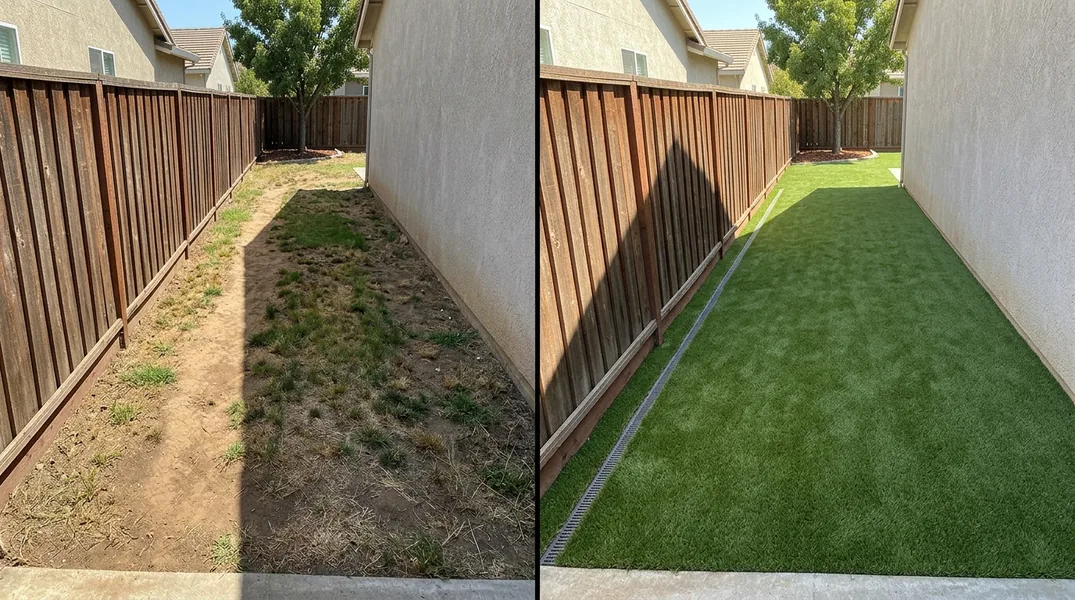
The San Jose Climate Challenge: Why Your Real Lawn Struggles
San Jose sits in a Mediterranean climate zone where summers are hot and dry, and water restrictions are increasingly common. If you've owned a real lawn here, you've probably watched it turn brown and brittle by late July, no matter how much you water. This isn't a reflection of your gardening skills; it's simply the reality of maintaining natural grass in the Bay Area's arid season.
Real grass demands consistent moisture, especially during peak heat. In San Jose, that means running your irrigation system heavily from June through September, which drives up your water bill and conflicts with local conservation mandates. Many homeowners face the uncomfortable choice between a brown lawn or violating water-use guidelines. The dry-season brown-out is almost inevitable with traditional turf, making your yard look neglected even when you're doing everything right.
Turf vs Artificial Grass: Understanding the Key Differences
When comparing turf vs artificial grass, it's important to understand that these terms are often used interchangeably, but the distinction matters for your decision. Real turf (natural grass) is a living plant that requires water, sunlight, nutrients, and regular maintenance. Artificial grass, by contrast, is a synthetic product made from polyethylene or polypropylene fibers designed to mimic the appearance and feel of real grass without the ongoing care demands.
The artificial grass vs real grass debate really comes down to your priorities. Real grass offers aesthetic authenticity and a natural feel underfoot, but it demands year-round attention: mowing, fertilizing, weed control, pest management, and consistent watering. Artificial grass eliminates nearly all of that maintenance while staying green and usable year-round. For homeowners in dry climates like ours, artificial grass represents a practical shift away from traditional landscaping expectations toward drought-tolerant solutions that actually work in our environment.
Residential Artificial Grass Installation has become increasingly popular precisely because it solves the climate mismatch that plagues real lawns in California. Modern artificial turf is also pet-friendly, UV-stable, and designed to drain properly, making it a legitimate alternative rather than a novelty.
Xeriscaping and Drought-Tolerant Landscaping: The Smarter Approach
Xeriscaping is a landscaping philosophy centered on reducing water consumption by selecting plants and materials suited to your climate. In the context of the turf vs artificial grass conversation, xeriscaping often means replacing water-hungry lawns with synthetic turf, native shrubs, mulch, and hardscape elements like pavers or gravel. This approach aligns perfectly with drought-tolerant landscaping principles that are becoming standard in California.
If you're committed to a greener yard without the brown-out cycle, a hybrid approach works well: artificial turf in high-traffic or visual focal areas, combined with native drought-tolerant plants like California poppies, sage, and manzanita in planting beds. This strategy gives you a vibrant, usable lawn while respecting the region's water limitations. Many homeowners find this combination more aesthetically pleasing than artificial turf alone, and it reduces overall water demand by 50 to 70 percent compared to a traditional all-grass lawn.
Drought-tolerant landscaping also means you're no longer fighting the climate. Your yard works with nature rather than against it, which translates to lower maintenance costs, fewer chemicals, and peace of mind knowing you're not wasting precious water resources on a plant that never thrived here in the first place.
Shade Problems: Where Real Grass Fails and Artificial Turf Succeeds
One of the most frustrating challenges for real lawn owners in San Jose is shade. Whether from mature oak trees, fences, or neighboring structures, shaded areas are lawn graveyards. Real grass needs sunlight to photosynthesize and grow, so even shade-tolerant varieties struggle under dense tree cover or all-day shadow. You end up with thin, patchy areas that invite weeds and moss, creating an eyesore that no amount of fertilizer or watering fixes.
Artificial grass has no such limitation. It looks equally lush in full sun or full shade because it doesn't depend on photosynthesis. This makes it an ideal solution for backyards with mature trees, north-facing properties, or homes surrounded by taller structures. If you've been managing multiple grass types across your lawn (sun varieties in open areas, shade varieties under trees) only to see both struggle, artificial turf eliminates that complexity entirely. You get uniform appearance and usability everywhere, regardless of light conditions.
The shade advantage extends to playability and longevity. Shaded real grass gets compacted and worn easily because it's already stressed, leading to bare patches and erosion. Artificial turf resists wear patterns and maintains its appearance even in high-traffic, low-light zones, making it perfect for areas under decks, near patios, or in corner yards that never seem to dry out properly.
Maintenance and Long-Term Costs: Real Grass vs Artificial Turf
Real grass requires ongoing investment in time and money. Beyond water bills, you're paying for mowing (weekly during growing season), fertilizer applications, weed control, aeration, thatch removal, and pest treatments. If you hire a landscaper, that's $100 to $300 monthly during the active season. Over a decade, that adds up quickly, and your lawn still turns brown in summer and requires dormancy management in winter.
Artificial turf has an upfront installation cost, but the long-term math favors it significantly. Modern artificial grass typically lasts 15 to 20 years with minimal maintenance. You'll rinse it occasionally to remove dust, brush the fibers to maintain texture, and clear debris, but that's it. No mowing, no watering, no chemicals. Many homeowners recoup their installation investment within 5 to 7 years through water savings alone, especially in California where water rates continue rising. If you're interested in understanding the specific financial picture for your property, San Jose Turf Installation can provide a detailed pricing breakdown and cost comparison tailored to your yard.
The maintenance advantage also means more time enjoying your yard instead of maintaining it. For busy professionals or families, that freedom is invaluable. You're not stressed about mowing schedules, watering restrictions, or seasonal dormancy. Your lawn is ready to use whenever you are, regardless of season or weather.
Making Your Decision: When to Choose Artificial Grass for Your San Jose Home
If your yard has significant shade, you live in an area with strict water restrictions, or you're tired of the brown-out cycle every summer, artificial grass is likely the right choice. Similarly, if you have pets and want a durable, easy-to-clean surface, Pet Turf & Dog Run Installation is specifically designed to handle the demands of active households.
Real grass still makes sense if you have a small, sun-drenched yard with no shade, you genuinely enjoy lawn care, and you're committed to drought-resistant varieties like fescue or buffalo grass. However, for most San Jose homeowners, the combination of heat, shade, water scarcity, and maintenance demands makes artificial turf the more practical and economical solution.
The best way to move forward is to assess your specific yard conditions: sunlight exposure, current grass health, water usage, and your lifestyle. If you're leaning toward artificial turf, San Jose Turf Installation can evaluate your property and discuss options tailored to your needs. Call us at (831) 612-1142 or request a free estimate to explore how artificial grass can transform your outdoor space into a year-round green oasis without the stress or waste.
Looking for a professional artificial grass installation company in San Jose? San Jose Turf Installation responds fast for all your artificial grass installation needs.
Get a Free Quote